
"unwashed coffee"
600 article(s) found

Coffee terminology unwashed coffee (Un-washed Coffee)
Unwashed coffee (Un-washed Coffee): or (natural), (naturally dried). Non-washing coffee: after the coffee fruit is naturally dried by the sun, the pulp and peel is removed by the sheller, and the quality of the coffee is unstable.

Coffee term: unwashed coffee (Un-washed Coffee)
Unwashed coffee (Un-washed Coffee): or (natural), (naturally dried). Non-washing coffee: after the coffee fruit is naturally dried by the sun, the pulp and peel is removed by the sheller, and the quality of the coffee is unstable.

Coffee terminology unwashed coffee (Un-washed Coffee)
Unwashed coffee (Un-washed Coffee): or (natural), (naturally dried). Non-washing coffee: after the coffee fruit is naturally dried by the sun, the pulp and peel is removed by the sheller, and the quality of the coffee is unstable.

Tanzanian coffee with unwashed beans. Arusha Coffee Manor in the Jilimazaro Mountain Fire area.
Tanzanian coffee has the excellent pedigree of the Middle Eastern non-washed bean family, bright acidity, rich and irritating flavor. There is no doubt that Kenyan coffee takes the lead in this family, but Tanzania has many advantages that are very similar to those of Kenya. Round beans are often specially selected and expensive, but sometimes they taste hairy.

Brazilian sweet coffee
Brazilian coffee generally refers to coffee produced in Brazil. There is a wide variety of Brazilian coffee, the vast majority of which are unwashed and sun-dried, classified according to the name of the state of origin and the port of transport. Brazil has 21 states and 17 states produce coffee, but four of them produce the largest, accounting for 98% of the country's total output. Brazilian coffee has a low sour taste, which goes well with coffee.

Coffee Basics Practical Green Bean Knowledge
Arabica stock can be distinguished into washed and unwashed (correctly, Robusta stock can also be distinguished in this way, but it is rare for robusta stock to adopt washed). In the green state, the endocarp part of the center cut is brownish yellow, which is coffee beans treated by unwashed refining method, while it is grayish green.
Practical raw bean knowledge
Arabica stock can be distinguished into washed and unwashed (correctly, Robusta stock can also be distinguished in this way, but it is rare for robusta stock to adopt washed). In the green state, the endocarp part of the center cut is brownish yellow, which is coffee beans treated by unwashed refining method, while it is grayish green.

The most traditional processing method of coffee beans
Drying is used for unwashed coffee beans. Wet treatment is used for thoroughly washed or semi-washed coffee beans. Except for the more common use of drying in Brazil and Ethiopia, most Arabica coffee beans are processed by wet treatment. In Indonesia, some Robart coffee beans are processed by wet treatment, but this is not common there. Drying method
Drying is the most traditional processing method of coffee beans.
Drying is used for unwashed coffee beans. Wet treatment is used for thoroughly washed or semi-washed coffee beans. Except for the more common use of drying in Brazil and Ethiopia, most Arabica coffee beans are processed by wet treatment. In Indonesia, some Robart coffee beans are processed by wet treatment, but this is not common there. Drying method

Drying is the most traditional method of processing coffee beans
Drying is used on unwashed coffee beans. Wet processing is used on thoroughly washed or semi-washed coffee beans. Most arabica beans are processed wet, except for drying, which is more common in brazil and ethiopia. In Indonesia, some Robert beans are wet processed, but this is not common locally. drying method
The most traditional drying method of coffee bean processing
Drying is used for unwashed coffee beans. Wet treatment is used for thoroughly washed or semi-washed coffee beans. Except for the more common use of drying in Brazil and Ethiopia, most Arabica coffee beans are processed by wet treatment. In Indonesia, some Robart coffee beans are processed by wet treatment, but this is not common there. Drying method

How to tell whether raw beans are washed or not washed?
Arabica stock can be distinguished into washed and unwashed (correctly, Robusta stock can also be distinguished in this way, but it is rare for robusta stock to adopt washed). In the green state, the endocarp part of the center cut is brownish yellow, which is coffee beans treated by unwashed refining method, while it is grayish green.
Drying method the most traditional processing method of coffee beans
Drying is used for unwashed coffee beans. Wet treatment is used for thoroughly washed or semi-washed coffee beans. Except for the more common use of drying in Brazil and Ethiopia, most Arabica coffee beans are processed by wet treatment. In Indonesia, some Robart coffee beans are processed by wet treatment, but this is not common there. Drying method
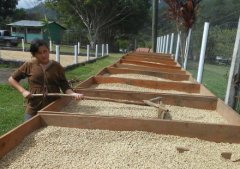
The most traditional drying method of coffee fruit coffee bean processing
Drying is used for unwashed coffee beans. Wet treatment is used for thoroughly washed or semi-washed coffee beans. Except for the more common use of drying in Brazil and Ethiopia, most Arabica coffee beans are processed by wet treatment. In Indonesia, some Robart coffee beans are processed by wet treatment, but this is not common there. Drying method

Brazilian sweet coffee generally refers to coffee produced in Brazil.
Brazilian coffee generally refers to coffee produced in Brazil. There is a wide variety of Brazilian coffee, the vast majority of which are unwashed and sun-dried, classified according to the name of the state of origin and the port of transport. Brazil has 21 states and 17 states produce coffee, but four of them produce the largest, accounting for 98% of the country's total output. Brazilian coffee has a low sour taste, which goes well with coffee.

The latest introduction of fine coffee, raw beans, Brazilian coffee
Brazilian coffee generally refers to coffee produced in Brazil. There is a wide variety of Brazilian coffee, the vast majority of which are unwashed and sun-dried, classified according to the name of the state of origin and the port of transport. Brazil has 21 states and 17 states produce coffee, but four of them produce the largest, accounting for 98% of the country's total output. Brazilian coffee has a low sour taste, which goes well with coffee.
Boutique coffee Brazilian coffee
Brazilian coffee generally refers to coffee produced in Brazil. There is a wide variety of Brazilian coffee, the vast majority of which are unwashed and sun-dried, classified according to the name of the state of origin and the port of transport. Brazil has 21 states and 17 states produce coffee, but four of them produce the largest, accounting for 98% of the country's total output. Brazilian coffee has a low sour taste, which goes well with coffee.
Individual coffee is recommended to meet Brazilian coffee
Brazilian coffee Brazils to distinguish it from Milds coffee. The vast majority of Brazilian coffee is unwashed and sun-dried and is classified according to the name of the state of origin and port of transport. Brazil has 21 states and 17 states produce coffee, but four of them produce the largest, accounting for 98% of Brazil's total output. They are: Parana, SaoPaulo and rice.
Introduction to Brazilian Coffee
Brazilian coffee generally refers to coffee produced in Brazil. There is a wide variety of Brazilian coffee, the vast majority of which are unwashed and sun-dried, classified according to the name of the state of origin and the port of transport. Brazil has 21 states and 17 states produce coffee, but four of them produce the largest, accounting for 98% of the country's total output. Brazilian coffee has a low sour taste, which goes well with coffee.
Learn about Brazilian coffee
Brazilian coffee taste with a low acidity, with the sweet and bitter taste of coffee, the entrance is extremely smooth, but also with a touch of grass aroma, in the fragrance slightly bitter, sweet smooth mouth, aftertaste can make people comfortable and carefree. Brazilian coffee refers to coffee produced in Brazil. There are many types of Brazilian coffee, most of which are unwashed and dried, depending on the state of origin.